

Natural fiber rugs, made from materials like jute, wool, and sisal, are indeed sustainable gift options. They’re crafted from renewable resources, biodegradable, and produced with fewer chemicals, making them eco-friendly. Plus, natural fiber rugs can improve indoor air quality by not emitting harmful VOCs. Available in various styles, these rugs provide both durability and aesthetic appeal. If you’re curious about their maintenance and other advantages, there’s more to explore on this topic!
Key Takeaways
- Natural fiber rugs are made from renewable resources, making them a sustainable gift option for eco-conscious recipients.
- They are biodegradable, reducing landfill waste and contributing to a healthier environment.
- Natural fibers improve indoor air quality by not emitting harmful VOCs or toxic chemicals.
- Supporting artisan communities by gifting these rugs promotes sustainable agriculture and local craftsmanship.
- Their durability and timeless aesthetic make them a long-lasting and appealing gift choice.
Understanding Natural Fiber Rugs

When we think about rugs, natural fiber options often come to mind as sustainable choices for our homes. These rugs come in various natural fiber types, each offering unique properties that cater to different needs.
- Wool: Durable and insulating, it retains color well and is great for high-traffic areas.
- Silk: Luxurious and soft, it supports intricate designs but requires careful handling.
- Jute: Soft and durable, it’s perfect for low to medium traffic areas like living rooms.
- Sisal: Tough and suitable for high traffic, though its coarse texture can be scratchy.
- Coir: Extremely durable, it’s ideal for high wear areas with its deep golden hue.
Understanding these fiber properties helps us choose the right rug for our spaces.
Environmental Benefits of Natural Fiber Rugs
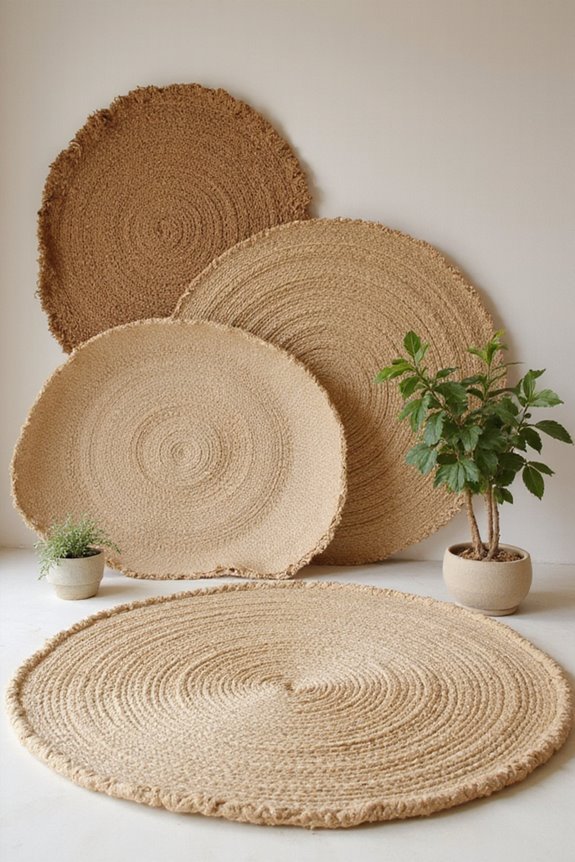
Natural fiber rugs offer numerous environmental benefits that make them an excellent choice for both our homes and the planet.
- Renewable Resources: Made from eco-friendly materials like jute, wool, and hemp, these rugs are harvested annually without harming ecosystems.
- Biodegradability: They decompose naturally, often within months, reducing landfill waste and avoiding harmful microplastics common in synthetic rugs.
- Lower Carbon Footprint: Manufacturing natural fibers requires less energy and fewer chemicals, cutting greenhouse gas emissions considerably.
- Health Benefits: Natural fiber rugs don’t contain harmful VOCs or toxic chemicals, improving indoor air quality and creating healthier living spaces.
Durability and Lifespan of Natural Fiber Rugs
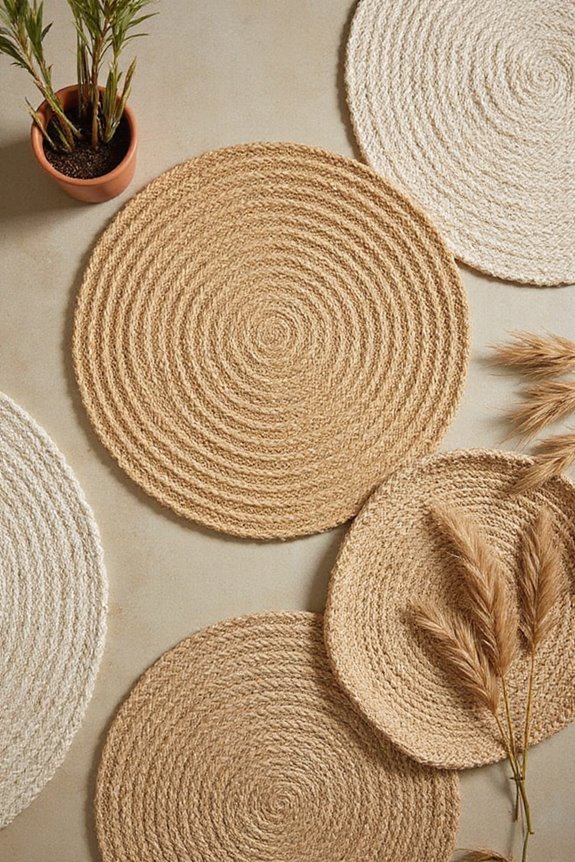
Durability plays a crucial role in the value of natural fiber rugs, impacting both their longevity and overall appeal. When we consider rug longevity, wool stands out due to its resilience, often lasting decades with proper care. In fiber comparison, jute is less durable, typically lasting around five years, making it suitable for low-traffic areas. Hand-knotted rugs generally offer superior durability, lasting centuries if well-maintained, while machine-made rugs may endure up to 20 years but often lack structural integrity. For ideal lifespan, we should place rugs in low-traffic zones and maintain them through regular vacuuming and prompt spill treatment. By choosing high-quality natural fibers and caring for our rugs, we enhance their beauty and longevity.
Health Advantages of Natural Fiber Rugs
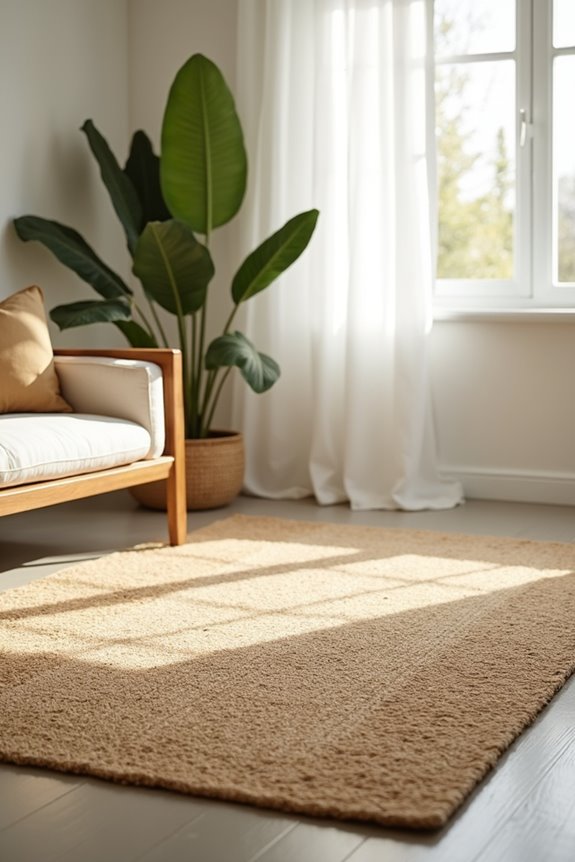
Choosing a rug made from natural fibers can greatly enhance our home’s health benefits. Here’s how:
- Allergy Reduction: Natural fiber rugs are typically hypoallergenic, which means they help minimize dust mites and allergens. This is especially beneficial for those with sensitivities or asthma.
- Respiratory Support: These rugs do not emit harmful volatile organic compounds (VOCs), improving indoor air quality. Their breathable materials allow for better air circulation, reducing airborne irritants.
- Ease of Cleaning: Natural fibers like wool and jute are easier to clean, helping us maintain a fresher living environment. Regular vacuuming or shaking keeps allergens at bay, further supporting our health.
Economic Considerations for Natural Fiber Rugs

When we consider the economic aspects of natural fiber rugs, it’s clear that they offer a range of benefits that can fit various budgets. For instance, jute and sisal rugs are often priced competitively with synthetic options, making them accessible. While wool and leather rugs may have higher initial costs, their durability guarantees long-term value, with lifespans averaging 10-15 years.
Supporting artisan communities is another significant economic impact. When we purchase these rugs, we directly contribute to local craftsmanship and fair wages. Additionally, using renewable materials fosters sustainable agriculture, benefiting local economies. Finally, lower maintenance costs and reduced waste from durable natural fibers mean our investment not only supports artisans but also promotes environmental responsibility.
Market Trends in Natural Fiber Rugs
As we explore market trends in natural fiber rugs, it’s evident that sustainability is a key driver of consumer preferences. The global market for these rugs is projected to grow from USD 70.86 billion in 2026 to USD 114.43 billion by 2033.
- Market Segmentation: Consumers are increasingly drawn to hand-loomed and handcrafted rugs, symbolizing authenticity.
- Design Innovations: Trends favor warm neutral palettes and natural textures, reflecting a desire for calming home environments.
- Customization: More buyers seek options that blend sustainability with personal style, such as rugs made from recycled materials.
With 73% of consumers prioritizing eco-friendly products, natural fiber rugs are becoming a staple for those wanting to create a welcoming, sustainable space.
Limitations of Natural Fiber Rugs
While natural fiber rugs offer many benefits, they also come with limitations that potential buyers should consider.
- Comfort Issues: Rugs made from jute and sisal can feel rough underfoot, which might be uncomfortable for children or pets. Those who prefer softer surfaces may find these rugs less appealing.
- Design Limitations: Typically, natural fiber rugs are available in neutral colors and simple patterns, limiting options for those seeking bold designs.
- Maintenance Concerns: They can absorb spills quickly, making stains difficult to remove. Deep cleaning methods are often not recommended due to moisture sensitivity.
- Environment Sensitivity: Natural fibers are prone to damage in humid areas, requiring careful placement in dry indoor settings to guarantee longevity.
Considering these factors can help us make informed gifting choices.
Sustainable Manufacturing Practices
Natural fiber rugs are crafted using sustainable manufacturing practices that prioritize environmental health and responsible sourcing. These rugs utilize renewable raw materials like jute, sisal, and organic cotton, which grow quickly and regenerate naturally. By avoiding petroleum-based synthetics, we help prevent microplastic pollution.
- Low-impact processes: Traditional weaving techniques reduce energy consumption, while eco-friendly dyes minimize harmful chemical use.
- Resource efficiency: Natural fiber rugs require less water and energy, resulting in a lower carbon footprint.
- Durability: Their robust design extends product lifespan, reducing the need for replacements.
Caring for Natural Fiber Rugs
Caring for natural fiber rugs is essential if we want to maintain their beauty and longevity. Here are some key rug maintenance tips to follow:
- Vacuum Weekly: Use a vacuum without a beater bar, moving in the direction of the weave.
- Spot Clean: Blot spills with a dry microfiber cloth and apply a mild cleaning solution, testing in a hidden area first.
- Moisture Management: Keep rugs dry; if wet, blot and use fans to dry quickly.
- Rotate Regularly: This prevents uneven wear and fading from sunlight.
- Use Non-Slip Pads: They add cushioning and protect the fibers.
Choosing the Right Natural Fiber Rug as a Gift
When selecting a natural fiber rug as a gift, it’s important to reflect on several factors that align with the recipient’s preferences and lifestyle. Here are some key points to consider:
- Style Preferences: Choose a rug that matches the recipient’s décor. For instance, sisal offers earthy tones, while jute provides a soft, textured look.
- Gifting Occasions: Contemplate the context. Coir rugs are perfect for entryways due to their durability, while seagrass suits coastal-themed spaces.
- Durability Needs: Understand the traffic level in the recipient’s home. Sisal and coir work well in high-traffic areas, while jute is best for low-traffic rooms.
Frequently Asked Questions
Can Natural Fiber Rugs Be Used in Outdoor Settings?
Did you know that seagrass rugs can withstand moisture better than most? When using natural fiber rugs outdoors, we should consider durability factors and maintenance tips to guarantee they stay beautiful and functional for our shared spaces.
Are There Any Specific Allergies Related to Natural Fibers?
When it comes to natural fibers, we often face allergy symptoms like sneezing or itchy skin. Regular cleaning and choosing hypoallergenic options can help us enjoy the beauty of these fibers without the discomfort.
How Do I Remove Stains From Natural Fiber Rugs?
We understand stains can be intimidating, but with the right cleaning techniques, we can tackle any stain type effectively. Blot spills immediately, use mild soap, and remember to dry thoroughly for lasting beauty.
Can Natural Fiber Rugs Be Recycled After Use?
Yes, we can recycle natural fiber rugs using various recycling methods. By doing so, we considerably reduce their environmental impact. Let’s explore local options together, ensuring our choices contribute positively to our planet’s health.
What Are the Colorfastness Properties of Natural Fiber Rugs?
Natural fiber rugs typically struggle with color retention and dye stability. Their structures often lead to faster fading, especially in sunlight. We should care for them properly to maintain their beauty and vibrant hues together.