

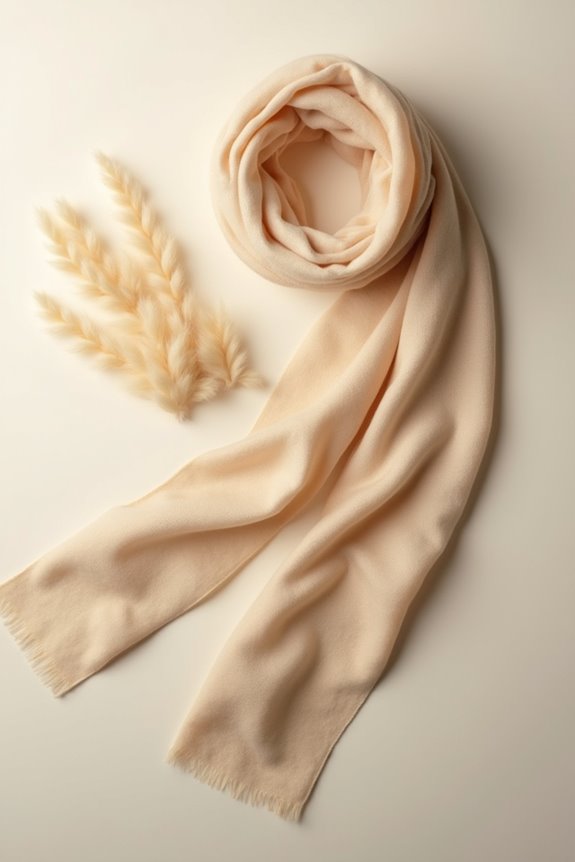
When we choose the right cashmere scarf, we should focus on several key factors. First, check for softness; authentic cashmere is exceptionally smooth and non-itchy. Next, look for quality markers like tight weaves and labels stating “100% cashmere.” Consider the grade, as Grade A offers the finest fibers for durability and warmth. Finally, pay attention to fiber length for a velvety feel. You’ll discover more about cashmere quality and maintenance if you continue exploring.
Key Takeaways
- Look for scarves labeled “100% cashmere” to ensure authenticity and avoid low-quality fakes.
- Check the fiber grade; Grade A offers superior softness and durability compared to Grades B and C.
- Opt for longer fibers (34-36 mm) for enhanced strength, smooth texture, and resistance to pilling.
- Assess the fabric’s weave; a tight, dense weave indicates higher quality and better longevity.
- Consider the scarf’s warmth and breathability to ensure comfort in varying climates.
Understanding Cashmere Fiber Characteristics
When we consider cashmere, it’s important to understand its unique fiber characteristics that set it apart from other materials. Cashmere softness is one of its most appealing traits, as the fibers are bumpy and cling together, resulting in a non-itchy texture. This makes cashmere a pleasure to wear, even for those with sensitive skin.
Moreover, cashmere warmth is exceptional. Its tiny hollow air chambers efficiently trap body heat, providing excellent thermal insulation. In fact, cashmere can be up to eight times warmer than sheep’s wool at the same weight. The fabric’s breathability also wicks moisture away, keeping us dry and comfortable in various temperatures. This adaptability makes cashmere an ideal choice for both cold and mild climates.
Identifying Authentic Cashmere

Understanding the unique characteristics of cashmere helps us appreciate its quality, but it’s just as important to know how to identify authentic cashmere. Let’s debunk some cashmere myths and tackle common misconceptions together.
- Feel and Texture: Authentic cashmere is exceptionally soft and smooth. If it feels rough or itchy, it’s likely not genuine.
- Physical Tests: Stretching the fabric shows its elasticity, and a burn test reveals whether it’s real.
- Weave and Craftsmanship: Look for a tight, dense weave with minimal flaws. Authentic pieces often lack tassels and have clean ends.
- Label and Price: Verify it states “100% cashmere.” Beware of prices that seem too good to be true; genuine cashmere is rare and costly.
Cashmere Grade Classification Explained

Choosing the right cashmere scarf can feel overwhelming, especially with the various grades available on the market. Understanding cashmere sourcing and grade differences helps us make informed decisions.
- Grade A: Ultra-fine fibers (14-15 microns) offer exceptional softness and durability. This grade is rare and commands a high price.
- Grade B: With fibers (16-19 microns), it balances warmth and cost, making it a popular choice for quality garments, though slightly less durable.
- Grade C: Coarser fibers (over 20 microns) are the least desirable, providing a more affordable option but often leading to faster wear.
The Importance of Fiber Length

Fiber length plays an essential role in determining the quality of cashmere scarves. Longer fibers, typically measuring 34-36 mm, provide superior fiber strength and durability. Here’s why that matters:
- Texture Smoothness: Long fibers create a velvety feel, enhancing softness and overall comfort. We all want that luxurious touch against our skin.
- Durability: Scarves made from long fibers resist pilling and shedding, maintaining their look over time. This means better shape retention and fewer replacements.
- Drapability: Longer fibers also improve how the scarf flows, giving a more elegant appearance.
When selecting a cashmere scarf, remember that investing in longer fibers leads to a cozy, stylish accessory that stands the test of time.
Effects of Blends on Cashmere Quality

When we consider the effects of blends on cashmere quality, it’s important to recognize how different materials interact with cashmere’s natural properties. Blends can enhance blended softness and fiber durability, but they come with trade-offs.
- Silk Blends: These maintain luxury and softness while improving shape retention and drape.
- Wool-Cashmere Blends: These enhance durability with minimal loss of warmth, making them resilient for everyday use.
- Synthetic Blends: While they may add warmth and reduce pilling, they can compromise cashmere’s natural softness and breathability.
Ultimately, choosing a blend depends on your priorities. If you value durability and a cozy feel, wool blends can be ideal. If softness and luxury are paramount, a higher percentage of pure cashmere might be best.
Maintenance Tips for Longevity
To get the most out of our cashmere scarves, proper maintenance is key. Here are some essential tips for longevity:
Washing Frequency
- Hand wash in cold water, limiting washes to two to three times per season.
- Use mild detergents designed for wool or cashmere.
Pilling Prevention
- Minimize friction from rough surfaces and jewelry to avoid pilling.
- Rotate your scarves to reduce wear and gently de-pill using a cashmere comb or razor.
Storage
- Store scarves folded in breathable cotton bags, using natural moth repellents.
- Avoid plastic bags and keep them in a cool, dry place to prevent moisture buildup.
Recognizing Signs of Quality in Cashmere
Recognizing the signs of quality in cashmere is essential for making an informed purchase. Here’s what to look for:
- Color Consistency: High-quality cashmere has a uniform color, often from white or light fibers, which indicates less processing. Dark or mixed colors usually signal lower quality.
- Visual Inspection: Under bright light, check for fluff. If you see 1-2mm of visible fluff, it may indicate shorter fibers, which lead to pilling. Quality cashmere should resist pilling, showing a smooth surface instead.
- Texture: Gently rub the fabric against your skin. Authentic cashmere feels soft and warm without itchiness. If it feels overly soft, it might lack durability.
Making an Informed Purchase Decision
How can we guarantee we’re making the best choice when buying a cashmere scarf? First, we should establish our budget strategies. Setting a clear spending limit helps us balance quality against cost. Remember, higher-priced scarves often feature longer fibers and tighter weaves, ensuring durability.
Next, let’s research brands known for quality and ethical practices. Reading customer reviews helps us identify the best options. We should prioritize scarves labeled 100% cashmere for ideal softness and warmth.
Lastly, check for construction details. A 2-ply scarf will offer better warmth and strength. By following these shopping tips, we can confidently choose a cashmere scarf that not only fits our budget but also enhances our wardrobe and sense of belonging.
Frequently Asked Questions
How Should I Wash My Cashmere Scarf?
When we care for our cashmere, it’s like nurturing a delicate flower. Using gentle washing techniques and drying methods, we preserve its beauty, ensuring it remains a cherished part of our cozy wardrobe for years.
Can Cashmere Scarves Be Worn in Summer?
Absolutely, we can wear cashmere scarves in summer! Their versatility makes for perfect summer layering, allowing us to stay stylish while enjoying the breathable comfort they provide, even on warmer days. Let’s embrace that elegance together!
What Are the Best Colors for Cashmere Scarves?
Like a painter’s palette, we’re drawn to vibrant color trends and seasonal palettes for cashmere scarves. Boysenberry, martini, and skyline blue resonate beautifully, reflecting our shared style and warmth, making every outfit feel effortlessly chic.
How Do I Store My Cashmere Scarves Properly?
When it comes to storing our cashmere scarves, we should prioritize proper storage techniques and scarf organization. Let’s fold them neatly, use breathable bags, and keep them in a cool, dry space for lasting beauty.
Are Cashmere Scarves Suitable for Sensitive Skin?
Are cashmere scarves suitable for sensitive skin? Absolutely! With their hypoallergenic properties, they aid in allergies management and provide comfort for fabric sensitivity. We can enjoy the luxury without worrying about irritation or reactions.