


To select the best printable meal planning kit, we should consider a few important factors. First, we need to assess our meal planning needs, including cooking skills and dietary preferences. Next, it’s wise to evaluate nutritional options, ensuring they meet our dietary restrictions and goals. Usability features, like editable templates and grocery lists, can enhance convenience. Finally, comparing costs, format compatibility, and included resources can lead us to the right choice. Let’s uncover even more tips for success!
Key Takeaways
- Assess your cooking skills and meal frequency to choose a kit that fits your lifestyle and needs effectively.
- Consider dietary restrictions and preferences to select kits that align with specific diets and nutritional goals.
- Look for user-friendly templates that include grocery lists, meal tracking, and customizable sections for better organization.
- Evaluate the cost and value of kits, factoring in long-term savings from printable options versus recurring meal kit fees.
- Explore customization features and community support resources to enhance your meal planning experience and receive peer guidance.
Understanding Your Meal Planning Needs
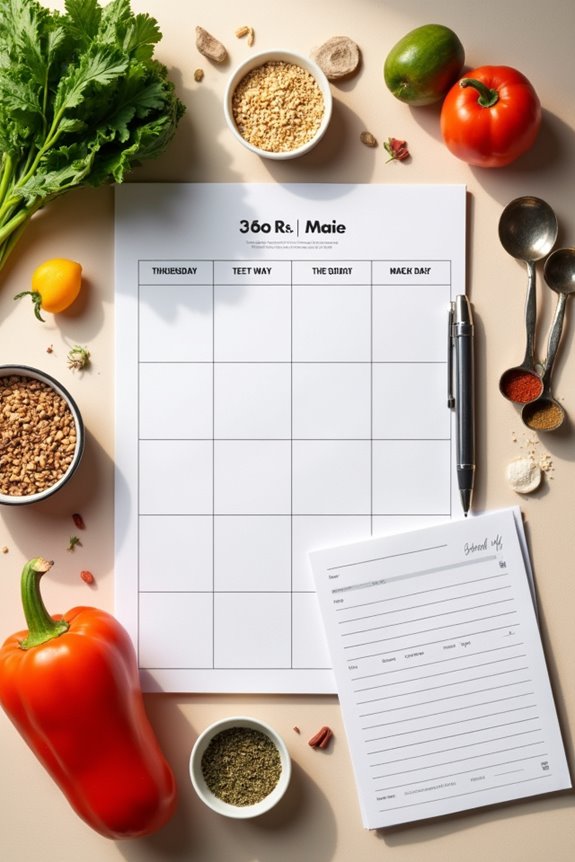
When we’re choosing a meal planning kit, how do we determine what best fits our needs? First, we should consider our meal frequency and cooking skills.
- Lifestyle Fit: If we have a busy schedule, quick-cook or pre-prepped meals might be ideal.
- Cooking Complexity: For those with advanced cooking skills, kits offering more complex recipes could be enjoyable.
- Portion Sizes: We should also think about how many servings we need, ensuring the kit aligns with our household size.
- Flexibility: Some meal kits offer flexible subscriptions, allowing us to skip weeks or choose delivery dates that suit our routine.
Evaluating Nutritional and Dietary Options

Evaluating nutritional and dietary options is key to finding a meal planning kit that truly meets our health goals. We should look for kits that promote nutritional balance, helping us track our calories and macronutrients effectively. Here are some important factors to take into account:
- Dietary Flexibility: Choose kits tailored for specific diets, like vegan, low-FODMAP, or diabetic-friendly, to accommodate our individual health needs.
- Nutrient Diversity: Opt for kits that emphasize a variety of food groups, ensuring we get a well-rounded intake of vitamins and minerals.
- Portion Control: Kits with sections for portion management can assist us in avoiding overeating while still meeting our nutritional requirements.
Assessing Usability and Convenience Features
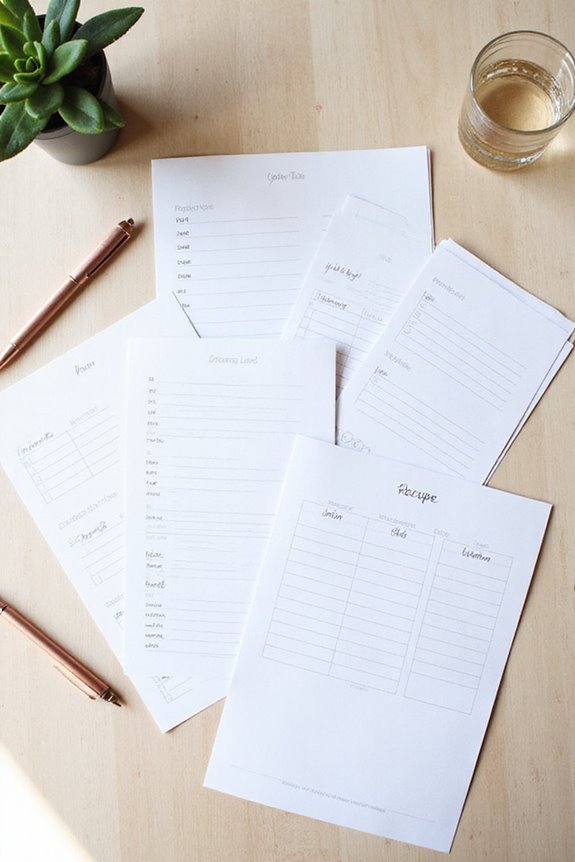
How can we guarantee our meal planning kit is as user-friendly as possible? By focusing on usability and convenience features, we create a more engaging experience for everyone. Here are some key elements to evaluate:
- User-Friendly Interfaces: Clean layouts and organized sections simplify meal tracking. This allows us to navigate our plans quickly, making meal assignment easier.
- Convenient Access: Printable planners can be displayed in our kitchens, making them visible for family participation. Editable digital templates let us type directly into forms, enhancing flexibility.
- Integrated Grocery Lists: Combining meal plans with grocery lists minimizes extra trips to the store and helps us shop more efficiently.
Considering Cost and Value Factors

What factors should we consider when looking at the cost and value of printable meal planning kits? First, we should think about cost efficiency. Printable kits typically range from $5 to $20, making them more budget-friendly compared to meal kits that can cost $6 to $12 per serving.
Additionally, we eliminate recurring fees by choosing printables, allowing for long-term savings. Here are some key points to keep in mind:
- Many printables come with extra resources, like grocery lists.
- Investing in a printable can help us avoid impulse buys, reducing overall food costs.
- We can find free or low-cost options to test before committing.
Analyzing Aesthetic and Organizational Design

When we’re considering printable meal planning kits, the aesthetic and organizational design can greatly impact our experience. A well-designed kit combines aesthetic balance and design consistency, making it visually appealing and easy to use.
- Visual Appeal: Look for kits with professional designs, readable fonts, and engaging decorative elements that reflect our style, whether minimalist or colorful.
- Layout Efficiency: Organizers should clearly segment meals and include sections for grocery lists and notes, enhancing our planning workflow.
- User-Friendly Design: Opt for layouts with contrasting color schemes and adequate whitespace to reduce visual fatigue, allowing us to focus better.
Exploring Customization Features
Customization features in printable meal planning kits offer us valuable tools to create a personalized experience. By utilizing various customization techniques, we can tailor the kits to our unique user preferences.
- Template Flexibility: We can choose from different formats and themes, allowing us to match styles with our needs.
- Dietary Adjustments: Advanced options let us filter based on over 40 diet types and customize nutritional targets.
- Editing Tools: We can change font styles, sizes, and colors, or even add personal logos for a professional touch.
- Grocery Integration: Many kits include sections for shopping lists and pantry inventories, making grocery management easier.
These features enable us to enhance usability and create meal plans that truly resonate with our lifestyles.
Investigating Support and Additional Resources
How can we guarantee our printable meal planning kit provides the support and resources we need? First, let’s look for available support channels like email, chat, or phone assistance. A well-designed kit often includes FAQs or help sections to answer common questions.
Next, resource availability is key. We should check for access to recipe databases, shopping lists, or nutrition guides. Additionally, tutorial videos or step-by-step guides can greatly enhance our experience.
Lastly, user communities or forums can offer valuable peer support and shared tips. By ensuring our chosen kit includes these elements, we’ll feel more confident and connected in our meal planning journey.
Comparing Printable Formats and Compatibility
As we explore our options for meal planning kits, we should consider the various printable formats and their compatibility with our devices. Here’s a quick format comparison:
- PDF: Great for retaining layout and design integrity; editable PDFs allow easy typing before printing.
- Word and Google Docs: Perfect for those who want to make text changes and format adjustments easily.
- Image files: Generally static, meant for direct printing without edits.
For compatibility checks, verify our planners support standard paper sizes like Letter and A4. Most home printers work well, but professional printing can enhance quality. Some planners even let us choose page sizes before downloading, helping us achieve the best print results. Always check if our devices support the chosen format for a seamless experience.
Looking for Meal Variety and Flexibility
When we’re looking to enhance our meal planning, variety and flexibility play essential roles in keeping things fresh and enjoyable. A thorough kit should include:
- Meal Diversity: Incorporate a master list of family favorites alongside new recipes from various cuisines, ensuring everyone finds something they love.
- Recipe Rotation: Use meal cards to easily rotate dishes, preventing repetition and boredom throughout the week.
- Flexible Layouts: Choose planners that fit our schedules, whether they start on Sunday or Monday, and allow for customization based on dietary needs.
- Grocery Integration: Sections for grocery lists help us adjust meals based on what’s available, making it easier to incorporate seasonal ingredients.
With these components, we can create a meal plan that’s both varied and adaptable.
Reading Reviews and User Experiences
What should we consider when reading reviews and user experiences for printable meal planning kits? First, we should prioritize review authenticity by seeking verified buyer testimonials. These reviews often provide reliable insights into usability and overall satisfaction.
We can also look at feedback from various sources, such as blogs and official sites, to get a well-rounded view. Significantly, negative comments can reveal usability issues, helping us weigh the pros and cons.
It’s valuable to pay attention to common themes, like ease of use and flexibility in meal options. Long-term user experiences can show how consistently a kit meets needs over time. By analyzing these elements, we can make informed choices that suit our meal planning lifestyle.
Frequently Asked Questions
How Often Should I Update My Meal Planning Kit?
We should update our meal planning kit regularly, ideally monthly for seasonal updates, or weekly if we prefer meal frequency flexibility. This keeps our meals fresh, aligned with our needs, and reduces the stress of planning.
Can I Share My Meal Planning Kit With Family or Friends?
Absolutely, we can share our meal planning kits! Sharing benefits everyone, fosters family involvement, and enhances our meal experiences. Together, we can create diverse menus, encourage participation, and make meal prep a fun, collective effort.
What Supplies Do I Need to Print and Use the Kit?
To effectively print and use our meal planning kit, we’ll need printing supplies like quality paper and ink, along with digital tools for organizing and customizing our plans. Let’s get everything ready together!
Are There Any Meal Planning Kits Specifically for Beginners?
There are plenty of beginner-friendly options that simplify meal planning basics. These kits often include easy recipes and customizable plans, making cooking feel approachable and enjoyable for us as we start our culinary journey together.
How Do I Track My Progress With a Meal Planning Kit?
We can track our progress with meal planning kits by utilizing tracking tools like calendars and apps. Setting progress metrics helps us visualize achievements, adjust plans, and stay motivated together on our meal planning journey.


