

To select the best smartphone tripod, we should consider key features that enhance our photography experience. First, let’s evaluate type: mini, travel, and full-size tripods all serve different needs. Next, compatibility matters, so check the mount type for our smartphone. Stability is vital, too; choose a model with sturdy materials like aluminum or carbon fiber. Finally, portability is essential for travel. If we’re interested in more tips and specifics, we can explore further options together.
Key Takeaways
- Assess the tripod’s compatibility with your smartphone, ensuring the clamp accommodates widths between 56mm and 104mm securely.
- Consider the tripod’s build quality; materials like aluminum or carbon fiber offer stability and durability for your device.
- Look for adjustable features, such as extendable legs and 360-degree rotation, to enhance usability and shooting versatility.
- Evaluate portability by choosing lightweight and compact designs that fit easily into your backpack or pocket.
- Check for stability features like wide leg spreads and adjustable leg angles to ensure secure setups on various surfaces.
Understanding Different Types of Tripods
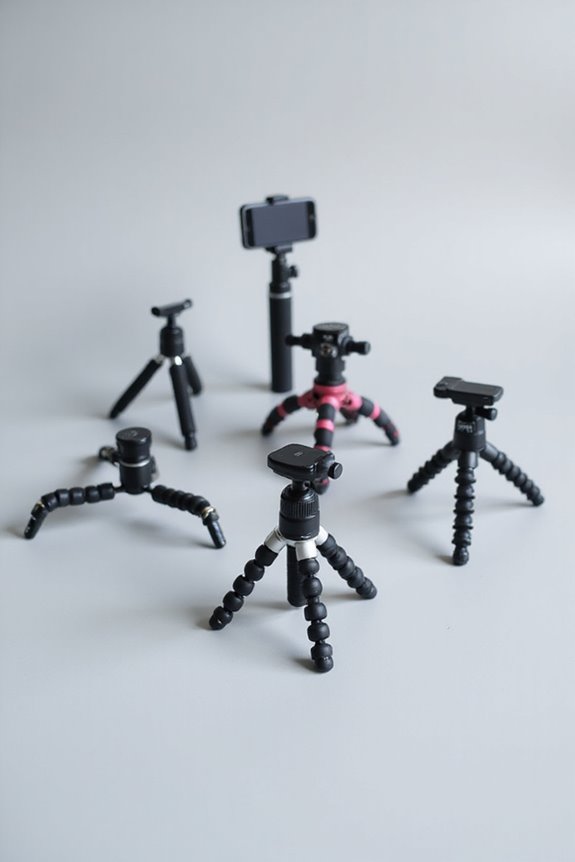
When choosing the right smartphone tripod, how do we determine which type suits our needs best? Understanding the different tripods available can help us make informed decisions.
- Mini Tripods: Highly portable, ideal for quick setups on flat surfaces.
- Travel Tripods: Lightweight and compact, perfect for creators on the go; often made from durable materials like carbon fiber.
- Full-Size Tripods: Offer stability and height, great for professional photography.
- Hybrid Tripods: Versatile options for users who switch between smartphones and cameras.
Each tripod comes with various locking mechanisms and adjustability features, like 360-degree rotation. Knowing the intended use can guide us to the best choice, ensuring we capture every moment beautifully.
Compatibility and Mount Types
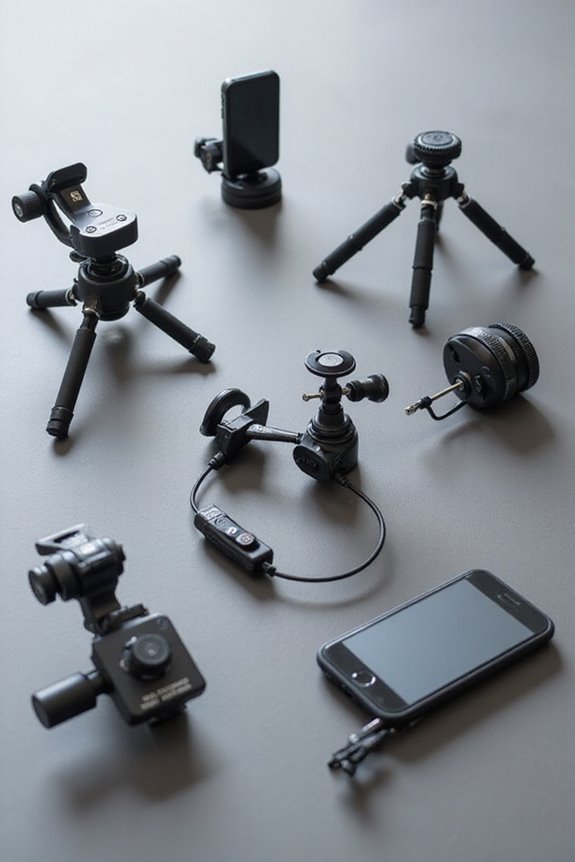
Selecting the right smartphone tripod involves not just understanding the types available, but also ensuring compatibility with our devices. When considering mount compatibility, we should check if the clamp types can accommodate our smartphones, which typically range from 56mm to 104mm in width. This range includes popular models like the iPhone 16 Pro Max and Galaxy S25 Ultra.
Additionally, adjustable clamps with rubber grips help protect our phones while ensuring a secure hold. Some mounts even support MagSafe for iPhones, allowing 360-degree rotation.
Most mounts use standard screw sizes, like 1/4″-20, making them versatile for various tripod legs. Quick-release mounts and cold shoe attachments can enhance our setup for content creation, providing flexibility and ease of use.
Assessing Build Quality and Stability
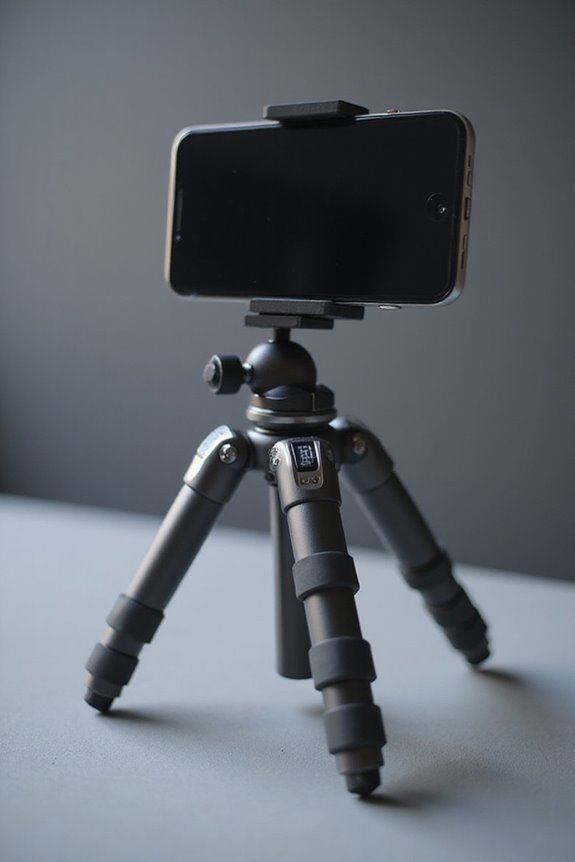
To guarantee we choose a smartphone tripod that meets our needs, evaluating build quality and stability is essential. Here are key factors to take into account:
- Material Rigidity: Opt for tripods made of aluminum or carbon fiber. Carbon fiber is lighter and stronger, reducing flex and enhancing stability.
- Joint Mechanisms: Secure connections at all joints prevent shaking. Metal twist locks are more durable than plastic flip locks but take longer to secure.
- Base Design: A wide leg spread and low center of gravity improve stability, especially on uneven surfaces. Look for tripods with adjustable leg angles for better placement.
- Load Capacity: Verify the tripod can support your smartphone and any accessories without bending. Higher weight capacities increase stability.
Importance of Portability and Size
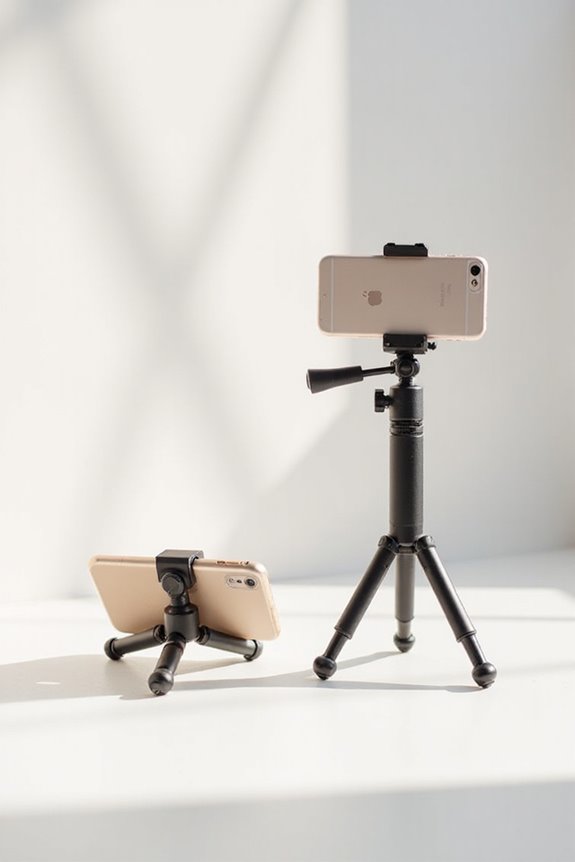
Portability and size are essential factors when choosing a smartphone tripod, especially for those of us who enjoy photography on the go. Lightweight tripods made from materials like carbon fiber or aluminum reduce our burden during travel, making spontaneous photography easier.
- Compact and foldable designs can fit into our backpacks or even pockets, enhancing travel convenience.
- Mini tripods, often under 1 kg, provide excellent support for our smartphones while remaining easy to transport.
- When selecting, we should consider tripods that pack down to 15 to 20 inches for ideal portability.
Prioritizing portability guarantees we’re more likely to carry our tripod, allowing for more frequent and versatile photography experiences wherever we are. Additionally, choosing a tripod with a lightweight design ensures you won’t be weighed down during your adventures.
Exploring Additional Features
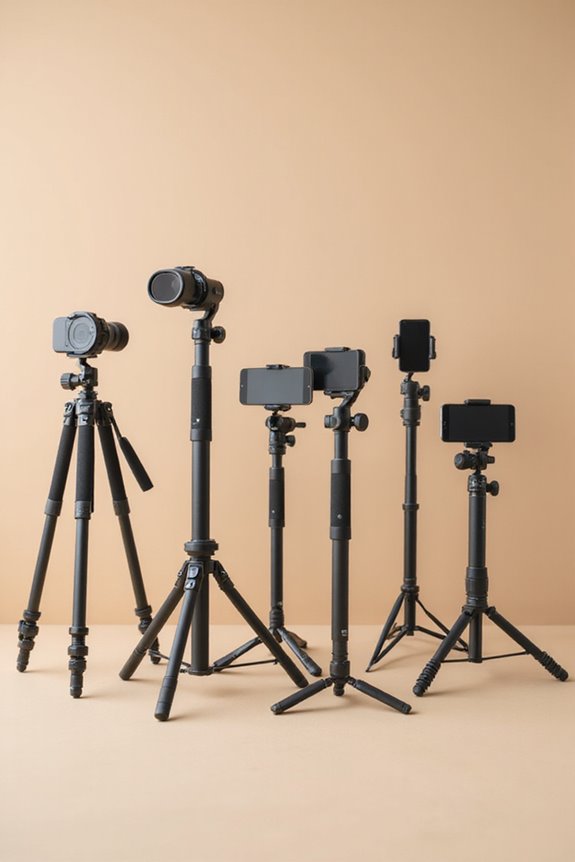
When we think about smartphone tripods, exploring additional features can enhance our photography experience greatly. Here are some key aspects to evaluate:
- Additional Accessories: Look for tripods with cold shoe mounts. These allow us to attach microphones or lights, improving audio and lighting for our shoots. Some models even support Arca-Swiss compatibility for more professional gear.
- Automation Features: Wireless remotes let us take hands-free shots, reducing shake and ensuring clearer images. Some tripods come with self-leveling capabilities, making solo filming easier, while integrated controls allow us to zoom or switch camera modes from a distance.
Evaluating Price and Value Considerations
Evaluating the price and value of smartphone tripods is essential for making an informed purchase. By conducting a price comparison, we can identify which models suit our needs and budgets.
- Entry-Level Options: Priced around $8, these offer basic functionality but limited durability.
- Budget Models: Ranging from $10 to $40, they balance affordability with decent features.
- Mid-Range Choices: Between $40 and $60, these provide enhanced stability and materials.
- High-End Tripods: Priced over $100, they offer premium build quality and multi-functionality.
In our value assessment, consider features like load capacity and additional accessories. Investing in a tripod that meets our photography needs guarantees better results and long-term satisfaction, making the price worthwhile.
Determining Your Photography Needs
Understanding our photography needs is a key step in choosing the right smartphone tripod. First, we should determine our photography styles. Are we focusing on stills, video, or both? This choice impacts the tripod’s required functionality.
Next, consider any special shooting techniques we want to use. For example, long exposures or panning shots might need tripods with fluid heads for smooth movements.
We should also think about the output quality. Casual snapshots don’t need heavy-duty gear, while professional content does.
Lastly, let’s not forget where we’ll be shooting. Indoor, urban, or rugged outdoor locations will dictate the tripod’s stability and build quality. By evaluating these needs, we can select a tripod that truly fits our creative journey.
Considering Height and Adjustability
Height and adjustability are essential factors to take into account when selecting a smartphone tripod. We want to guarantee our tripod offers height versatility for various shooting scenarios, from low tabletop shots to full standing height. Look for tripods with extendable center columns and multi-section legs, as these features provide an impressive height range.
Additionally, consider models with adjustable features, like twist or flip locks, which allow for quick and secure height adjustments. Tripods with independently adjustable legs are great for uneven surfaces, enhancing stability and versatility. Remember, while excess height can be beneficial, it may also affect portability. Finding the right balance between height capability and convenience is key for our mobile photography adventures.
Understanding Weight Capacity and Balance
When choosing a smartphone tripod, weight capacity and balance are crucial factors that can make or break your shooting experience. We should pay attention to the load recommendations provided by manufacturers, as they often suggest a capacity lower than the maximum for stability. Typically, smartphone tripods support loads between 2 kg and 4 kg.
To maintain balance, we need to take into account the total weight, including any accessories like lenses or microphones. Here are some key points to remember:
- Select a tripod with a load capacity exceeding the total weight by at least 20-30%.
- Choose materials like carbon fiber for strength without extra weight.
- Utilize balancing techniques, such as making sure the center of gravity stays within the tripod’s base.
Tips for Using Your Smartphone Tripod Effectively
Using a smartphone tripod effectively can greatly enhance our photography and videography experience. Here are some tips to guarantee a successful tripod setup and smartphone protection:
- Stability First: Extend the thicker legs first and adjust for uneven surfaces. Weigh down the base with sandbags or backpacks to prevent swaying.
- Secure Your Smartphone: Use rubberized padding in the phone clamp for grip and protection. Tighten it just enough to hold the device firmly, avoiding damage.
- Check Adjustments: Systematically lock all components, including leg locks and phone mounts, to maintain stability during shoots.
- Mind Your Environment: Be aware of wind and surface types, and avoid crowds to protect both your tripod and smartphone.
Following these tips can help us capture stunning images while keeping our equipment safe.
Frequently Asked Questions
Can I Use a Smartphone Tripod for My DSLR Camera?
Imagine a bridge connecting our smartphones and DSLRs. While some smartphone tripods offer compatibility, we must guarantee their stability can support our DSLR’s weight. Let’s choose wisely to capture memories without worry.
What Smartphone Models Are Incompatible With Most Tripods?
When considering tripod compatibility, we should remember that larger smartphones, those with bulky cases, or unique shapes often struggle to fit securely. Let’s explore which models might not work well with most tripods together!
How Do I Clean and Maintain My Tripod?
We often overlook tripod cleaning and maintenance, but it’s essential for longevity. Let’s regularly wipe down our tripods, disassemble for thorough cleaning, and lubricate joints to keep them functioning smoothly for all our photography adventures.
Are Smartphone Tripods Waterproof or Weather-Resistant?
When considering if smartphone tripods are waterproof or weather-resistant, we should look for waterproof materials and weather-resistant designs. These features help guarantee our gear stays safe in various conditions, allowing us to capture memories worry-free.
Can I Attach a Gimbal to a Tripod?
Oh, isn’t it ironic? We think tripod stability is all we need, but yes, we can attach a gimbal! Ensuring gimbal compatibility enhances our creativity, giving us smooth, professional-looking shots together. Let’s make magic!