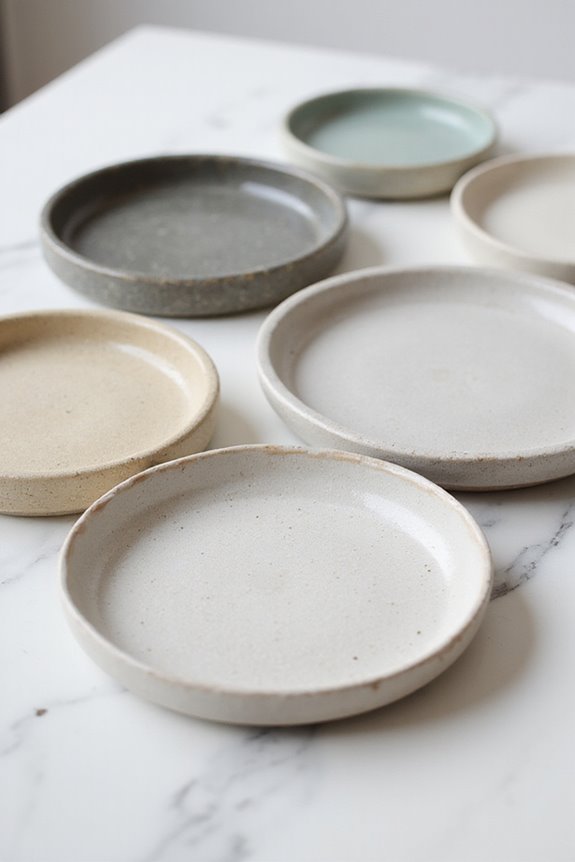


Handcrafted soap bars can be great for sensitive skin. They often contain gentle ingredients like goat milk, olive oil, and shea butter, which help moisturize and soothe. These soaps typically avoid harsh chemicals, such as sulfates and synthetic preservatives, that can irritate fragile skin. Because they retain natural glycerin, they support skin hydration and barrier health. If you’re curious about how these soaps are made and which ones to choose for ideal care, there’s more to discover.
Key Takeaways
- Handcrafted soap bars often use gentle, natural ingredients like shea butter and raw honey, which soothe sensitive skin effectively.
- They typically exclude harsh chemicals like sulfates and parabens, reducing the risk of irritation for sensitive skin types.
- Artisan soaps retain natural glycerin, which attracts moisture and supports skin barrier health, benefiting sensitive skin.
- Cold process methods preserve beneficial properties of ingredients, resulting in milder soaps suitable for sensitive skin.
- Many handcrafted soaps are formulated to be unscented or mildly scented, minimizing the chance of allergic reactions.
Understanding Handcrafted Soap Ingredients
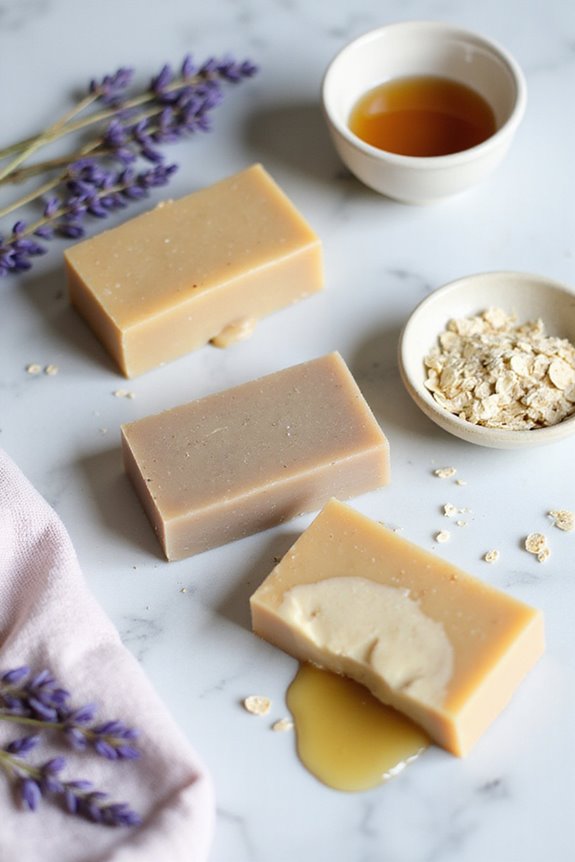
When we think about handcrafted soap, it’s essential to understand the ingredients that make them suitable for sensitive skin. By focusing on ingredient sourcing, we can find natural alternatives that work gently on our skin.
Key Ingredients:
- Goat Milk: Rich in fats and proteins, offering moisturizing benefits.
- Olive Oil: Gentle and promotes skin cell regeneration.
- Shea Butter: Soothes and softens dry skin.
- Oat Flour: Calms inflammation and supports gentle cleansing.
Additives:
- Pink Clay: Reduces skin irritation.
- Raw Honey: Natural antibacterial properties.
- Jojoba Oil: Hydrating and non-comedogenic.
Benefits of Glycerin in Skin Care
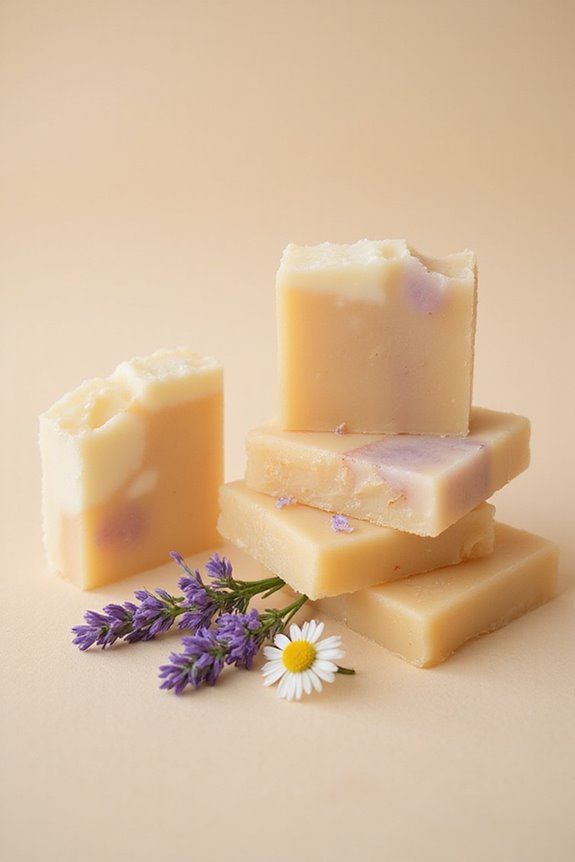
Glycerin is a key ingredient in skin care, especially for those of us with sensitive skin. Its glycerin benefits are numerous, particularly in enhancing skin hydration. Here are some notable advantages:
- Moisture Attraction: Glycerin draws water from the atmosphere and deeper skin layers, keeping our skin hydrated and plump.
- Barrier Support: It strengthens our skin barrier, reducing water loss and protecting against irritants.
- Texture Improvement: Glycerin smooths and softens skin by filling gaps between cells, which can minimize the appearance of fine lines.
- Healing Properties: It accelerates wound healing and soothes dry or inflamed skin, making it ideal for sensitive types.
Incorporating glycerin in our skincare routine can greatly enhance our overall skin health and comfort.
Formulations for Sensitive Skin Types
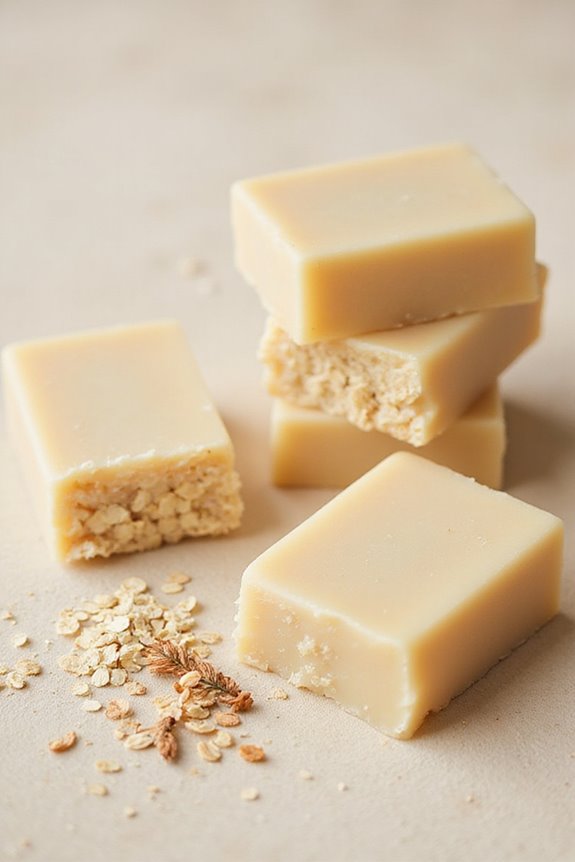
Creating effective formulations for sensitive skin types requires careful consideration of ingredients and methods. We should focus on creating sensitive skin formulations that incorporate nourishing ingredients while avoiding irritants. Here’s what we can do:
- Exclude harsh ingredients: Avoid parabens, synthetic preservatives, and sodium lauryl sulfate (SLS).
- Choose gentle additives: Incorporate colloidal oatmeal, shea butter, and raw honey for their soothing properties.
- Opt for safe bases: Use cold process soaps that retain natural glycerin and pH-friendly formulations.
- Limit scents: Formulate unscented or mildly scented soaps to minimize irritation risk. Additionally, many artisan soaps are suitable for sensitive skin types, making them a great choice for those with delicate skin.
The Manufacturing Process Explained
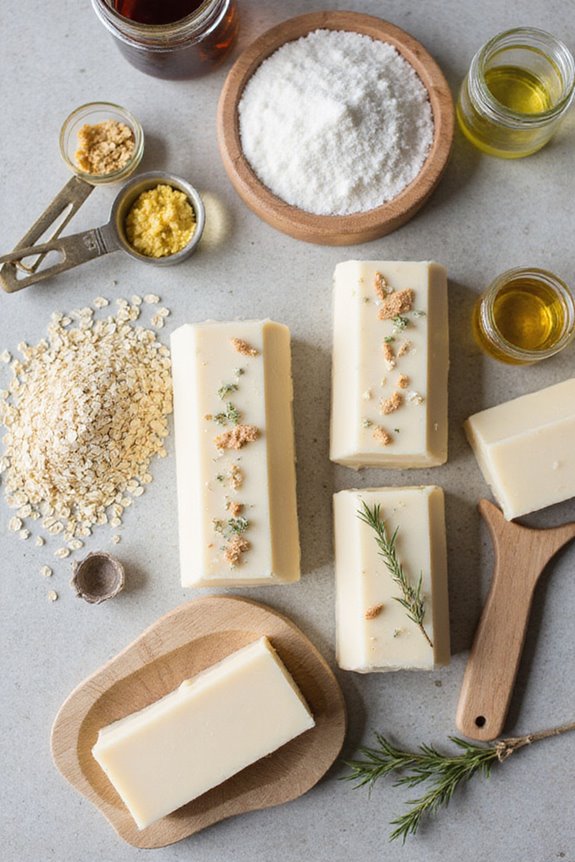
Understanding how handcrafted soap bars for sensitive skin are made involves examining the specific manufacturing processes used. The two primary methods are the cold process and hot process.
- Cold Process: This method combines oils and lye at controlled temperatures, allowing saponification to occur over 4+ weeks.
- Hot Process: Here, the mixture is heated, speeding up the saponification process and reducing curing time.
Both methods require careful ingredient selection, often avoiding irritants and using natural additives like aloe vera or oatmeal. After mixing, the soap is poured into molds, where it sets for up to 48 hours. Finally, it cures for 4 to 6 weeks, resulting in a milder, longer-lasting bar suitable for sensitive skin.
Avoiding Common Skin Irritants
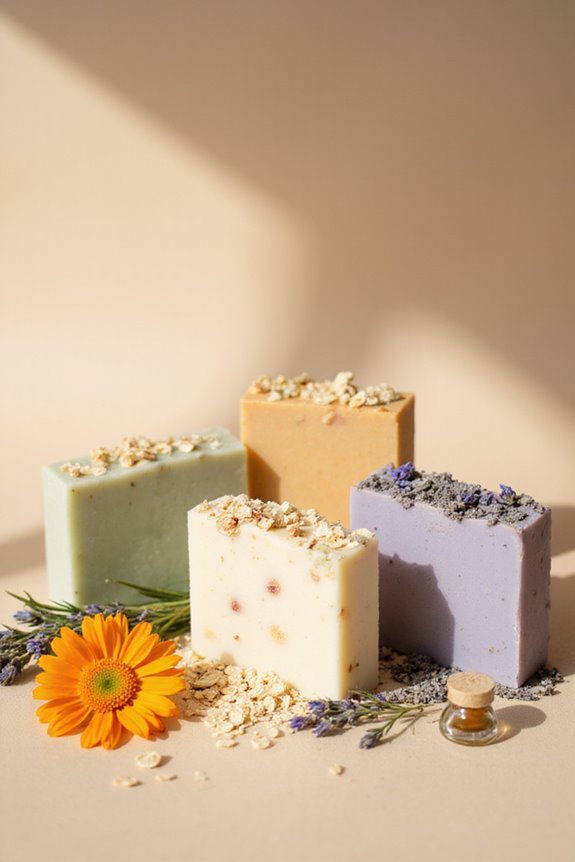
How can we effectively avoid common skin irritants when choosing handcrafted soap bars for sensitive skin? First, let’s look for products labeled “sulfate-free,” as sulfates can strip natural oils and exacerbate sensitivity. We should also be cautious of fragrances; they often contain undisclosed allergens that may trigger reactions. Opting for “fragrance-free” or those with natural essential oils is wise.
Additionally, we need to steer clear of formaldehyde and its releasing agents, which can worsen skin conditions. Antibacterial agents like triclosan can irritate sensitive skin, so choosing gentler alternatives is essential. Finally, avoiding soaps with high alcohol content and harsh acids can help protect our skin. By being mindful of these factors, we can better care for our sensitive skin.
Consumer Experiences With Handcrafted Soap
What do consumers really think about using handcrafted soap for their sensitive skin? Based on user experiences, many find these soaps highly suitable, often noting their gentle and non-irritating qualities. Here are some key points:
- Moisturizing Effects: Users appreciate the rich lather and hydration, with reports of relief from dry, irritated skin.
- Natural Ingredients: The variety of herbal and botanical combinations allows for tailored selections that minimize irritation.
- Product Comparisons: Handcrafted soaps are frequently preferred over commercial options, as they tend to be less drying and more nourishing.
- Fragrance Appeal: Many users enjoy pleasant, natural scents, which enhance satisfaction without causing allergic reactions.
Recommendations From Skincare Professionals
As many consumers have shared positive experiences with handcrafted soap, it’s important to contemplate the insights from skincare professionals. They often recommend specific ingredients for sensitive skin to guarantee ingredient safety and minimize skin reactions. Here are some key insights:
- Soothing Ingredients: Look for chamomile, aloe vera, and calendula for their anti-inflammatory properties.
- Moisturizing Oils: Natural oils like shea butter and jojoba oil hydrate without clogging pores.
- Hypoallergenic Formulations: Choose fragrance-free soaps to reduce allergic reactions.
- Gentle Textures: Opt for lightweight soaps that won’t strip the skin barrier.
It’s also wise to patch-test new soaps and consult brands about their ingredient sourcing to avoid potential irritants. Prioritizing these professional recommendations can enhance our skincare routine effectively.
Frequently Asked Questions
How Long Does Handcrafted Soap Typically Last?
Isn’t it comforting to know that handcrafted soap typically lasts 4 to 6 weeks? To extend its shelf life, let’s dry it properly and store it away from moisture for a longer-lasting experience together.
Can I Use Handcrafted Soap on My Face?
When considering handcrafted soap for facial cleansing, we find it offers great skin benefits. Its natural ingredients help soothe irritation and maintain hydration, making it a wonderful choice for those of us with sensitive skin.
Are There Specific Brands Recommended for Sensitive Skin?
Steering through the world of skincare can feel like wandering through a garden. For sensitive skin, we recommend fragrance-free options like Water Sweets or Osmia, celebrating their nourishing benefits and gentle touch for our delicate complexions.
Can Handcrafted Soaps Cause Allergic Reactions?
Absolutely, handcrafted soaps can cause allergic reactions due to certain allergic ingredients. We should be mindful of our skin sensitivity and carefully check labels to avoid potential allergens that might trigger unwanted reactions.
How Should I Store Handcrafted Soap Bars?
To keep our handcrafted soap bars happy, we should embrace proper soap storage techniques. Storing them in a cool, dry place with ideal humidity guarantees they stay fresh and fragrant, inviting us to indulge every time.